
mail@mountexperience.com
Fax No: +977-1-4379017
Phone No: +977-1-4374681
Phone No: +977-1-4374681
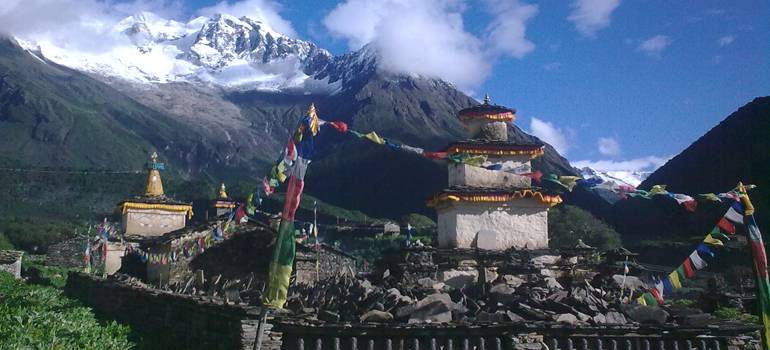
‘Tsum’ is derived from the Tibetan word ‘Tsombo’, which means vivid. Traditionally Tsum Valley was a culturally distinct geographical area called ‘Tsum Tso Chucksums’, which means 13 provinces ruled as a single territory. The altitude on Tsum Valley treks varies from 1,905m in Lhakpa to over 5,093m at Ngula Dhojhang Pass on the Tibetan border. The valley occupies an area of about 1,663sq.km. The Hidden Valley is surrounded by the Buddha Himal and Himal Chuli to the west, Ganesh Himal to the south, and Sringi Himal to the north. The valley includes two remote VDCs; Chhekampar (Upper Tsum) and Chumchet (Lower Tsum). Due to its remote location, ancient relics are still to be seen. People in Tsum Valley still practice the polyandry system and they have a unique culture, tradition and their own dialect. They celebrate unique cultural festivals such as Loshar, Dhacyhang, Saka Dawa, Faning and others. Many Tsumbas (residents of Tsum Valley) report that they have seen or found signs of Mehti, commonly referred as the ‘Yeti’ or ‘Abominable Snowman’.
The Tsum Valley Trek begins from Arughat in Gorkha district, which is easily accessible from Kathmandu. The exploration team recommends three different itineraries in Tsum Valley.